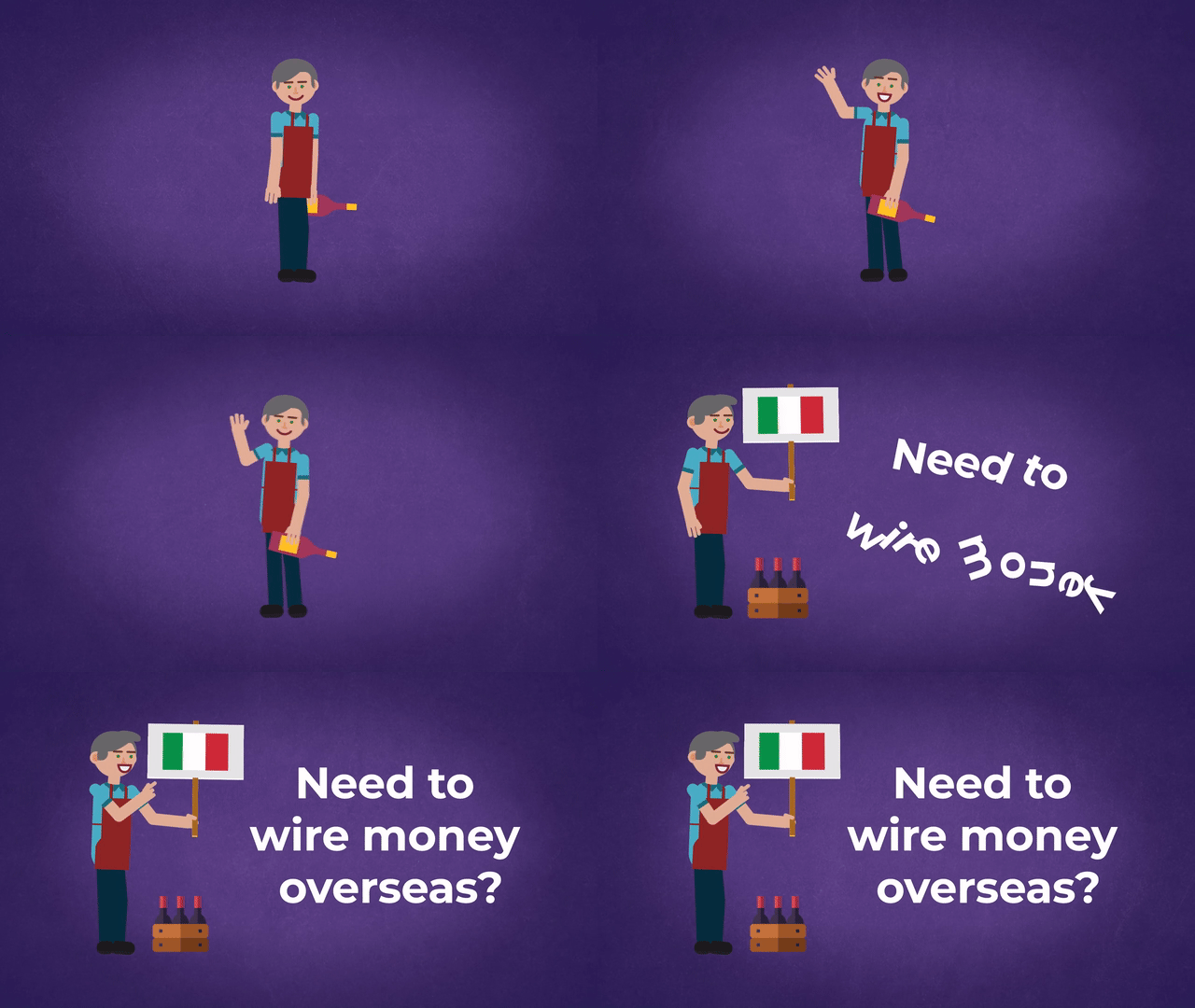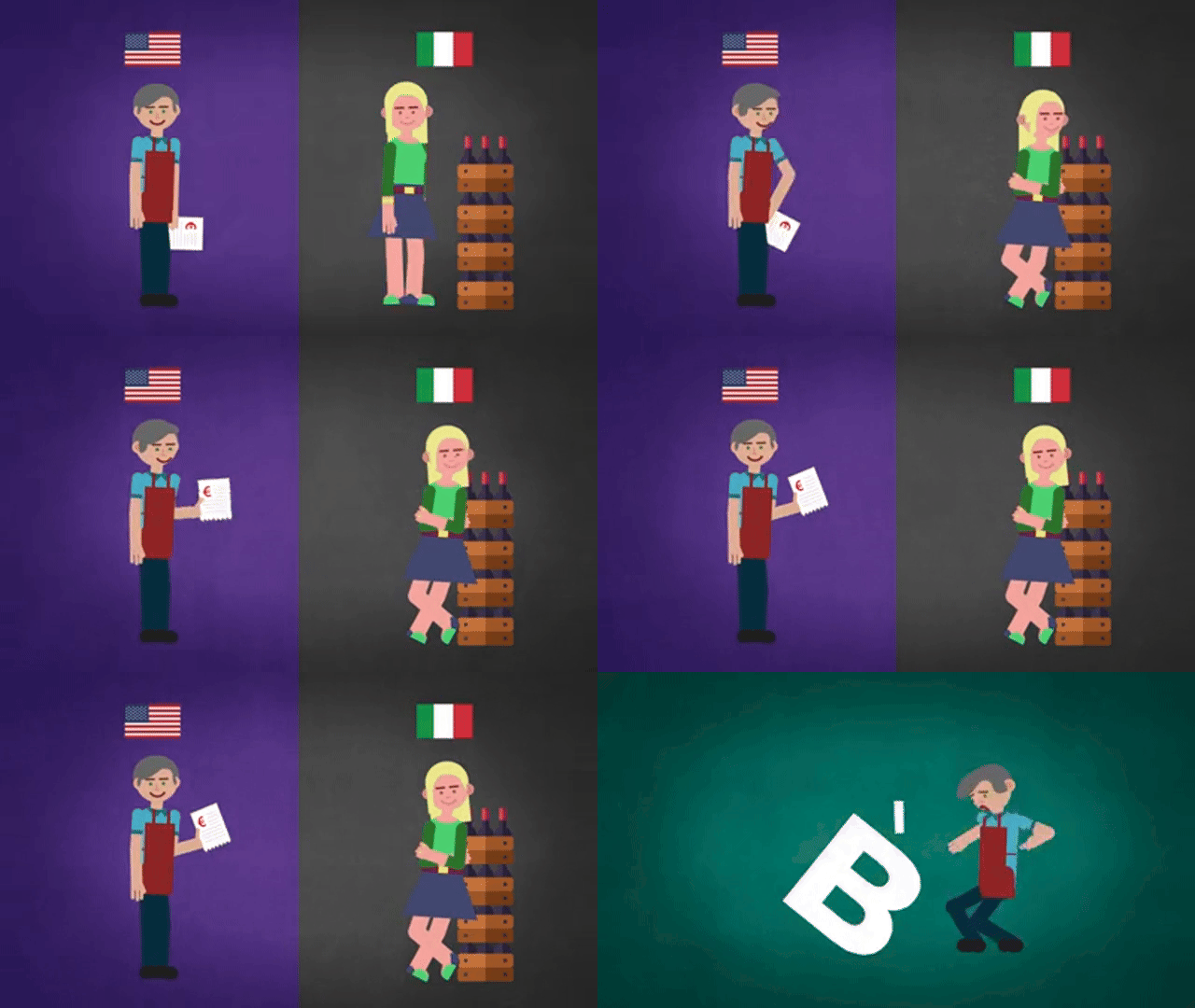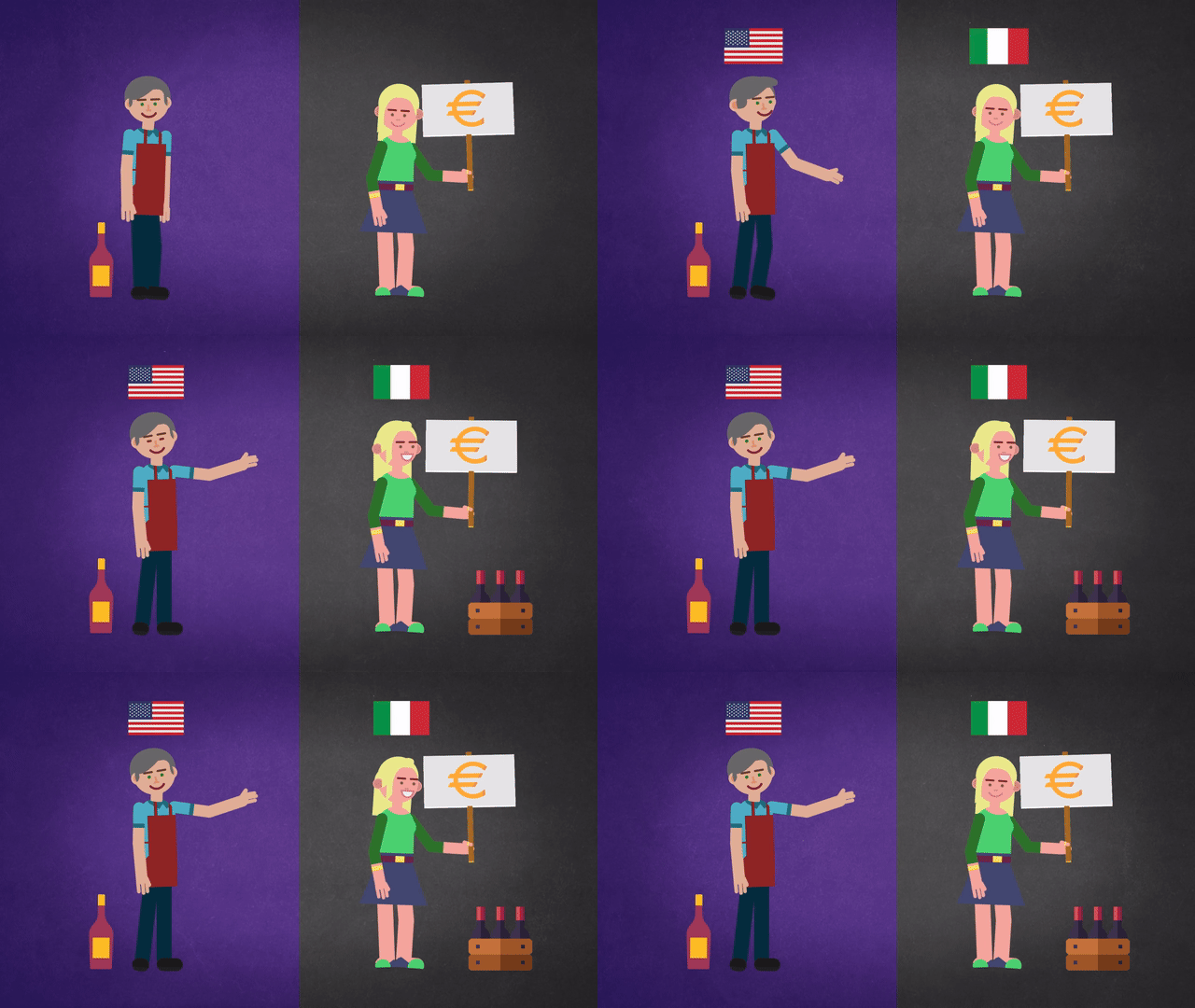
A currency exchange is when you are changing one currency for another. Let us review some examples of when you might want to exchange currency:
The process seems simple enough, I need to trade my currency for theirs, right?
Well, not exactly, there is what is called an exchange rate that determines the trade.
Several market participants can determine the exchange rate:
Currency transfers are important because we live in a global economy. Whenever you buy something that was made in another country, there is a currency exchange at some point. If you sell things to people in other countries, there is a currency exchange. You may have sent a gift to a friend or visited somewhere that required a currency exchange. Let us look at how important these exchanges are:
According to the World Trade Organization (1), exports account for more than 25% of the world economy (GDP) and is clearly growing. This means that currency exchanging is growing at a rapid pace and tools need to be implemented to manage risks.
Exchange rates change every second of every day. An example: You may have purchased a bottle of French Champagne for New Years 2012 for $30. Due to exchange rates, that price has changed:
|
December 31, 2011
|
July 15, 2012
|
Tomorrow
|
So from December to July, the price changed in my favor, that is good, right?
If you are importing things, the exchange rate has helped you by about 9%, however, if you export things to France the opposite is true. Lets say you export jets to France and the December 31, 2011 price was $20,000,000
|
December 31, 2011
|
July 15, 2012
|
Tomorrow
|
Great! I just made an extra $1,800,000 on each plane I sold! I’m loving it!
Not so fast, your plane costs the buyer $1,800,000 more (9% increase), so she is likely to buy it from your competitor. If that competitor is from France, the price has not changed for them, so you just lost a sale.
So who should be popping the bubbly when the exchange rate moves? The people buying from the importer? The people buying from the exporter? When the exchange rate moves, one side gains, and the other loses. That is always true unless you have a method to protect yourself from the movements.
Exchange rates can move a lot in short time span. It really depends on a lot of factors including the type of government, market psychology, interest rates, and fundamentally what people believe the value of one currency is to another.
As an individual, there are a few methods to protect yourself against exchange rate fluctuations. This is what a professional means when they “hedge” a risk. “Hedging” is when you are making a transaction that counteracts a market move that can cause you a financial loss. In this case, you are trying to hedge against currency or foreign exchange risk.
Let us say you are buying an antique from Canada. The seller will only accept Canadian dollars (CAD). If the purchase is today and you receive the goods today, you are doing what is called a “spot” transaction. You can go to the bank or a currency exchanger and ask for today’s spot price, and that is the rate at which you will exchange. You hand over the Canadian dollars, and the seller hands you the antique, case closed.
What if you agree to the price now, but have to pay in the future? This happens a lot with a business that is buying parts from a Canadian supplier for their product that is assembled in the United States, such as your new shark mounted laser beams. Now your laser beam business is exposed to “currency risk.” This means that between now and the time you pay, the exchange rate can change, either in your favor or against you. Let us look at the potential outcomes, assuming that today’s exchange rate is $1 to 1 CAD:
We have determined that exchange rates can randomly determine bonus time vs angry time, depending on how they move. One method used to protect against angry time is to exchange your money upfront. Going back to our shark laser example, you can exchange the money upfront, when the contract is signed, and wait with your Canadian dollars until it is time to pay. The upside is that you have effectively eliminated any risk that the exchange rate can move against you. However, you have given up any chance that the exchange rate moves in your favor. You give up bonus time to prevent angry time.
What if you want to keep today's exchange rate, but not actually exchange your money until the date you have to? Maybe you are saving up for a big vacation or other big purchase, or perhaps you are a company that is buying raw materials for products you are making three months from now. Using a 'Forward Contract' means that you commit to exchanging your money later, on a specific agreed-upon date, rather than 'up front' like in the previous section. Remember, time is money! You might not have all the cash in your possession for the future purchase, but today's rate might be good enough that you want to make sure you keep it for when you DO make the exchange.
Going back to our example, if you know that you have to pay your Canadian supplier in 30 days, you can buy a forward contract that locks in the 1:1 USD to CAD exchange rate for that time period. There are advantages and disadvantages:
For those that are confident in their math skills and interested in learning esoteric theories, net-netting, options, futures, and swaps are for you. We will be covering these products in the “Advanced Protection Methods” section (coming soon to an internet near you!)
Now what to do? Try out our calculator to see if our product can help you with your currency risk. Contact us with any comments or questions. Useful lingo and currency symbols are below.
Today’s exchange rate between dollars (USD) and Euros (EUR) is 1.2 USD per EUR. This means you will receive 1.2 USD for every EUR you exchange. You can typically find this rate by using a search engine. When you enter the bank or airport, the person at the exchange desk will say “The bid/ask spread is .01 ticks, so we will sell USD at the bid price of 1.21 and buy at the ask price EUR for 1.19.” Sound confusing? Well it is. The rule of thumb is to look at your transaction and see which rate is worse for you. That is the rate you will receive. So in our case, if you are changing dollars for Euros, a rate of 1.19 USD/EUR is better than 1.21 USD / EUR. Therefore, the rate you get from the bank is the 1.21 USD / EUR.